

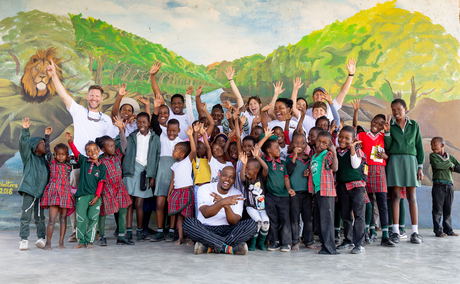
There are many ways to celebrate Mandela Day. This year at Klaserie Drift, it was about coming together. In partnership with our friends at Seeds of Light, members of our team spent the afternoon at Ekurhuleni, a local drop-in centre supporting more than 200 vulnerable children from the surrounding community. The mission was simple: prepare a delicious meal, share some delectable treats, and spend time celebrating alongside the children and staff who...
Meet the TeamLeopards, impalas, and a life inspired by nature – Meet Guide Eden
Posted by Emily on Fri November 6, 2026 in Lodge updates and Meet the Team.
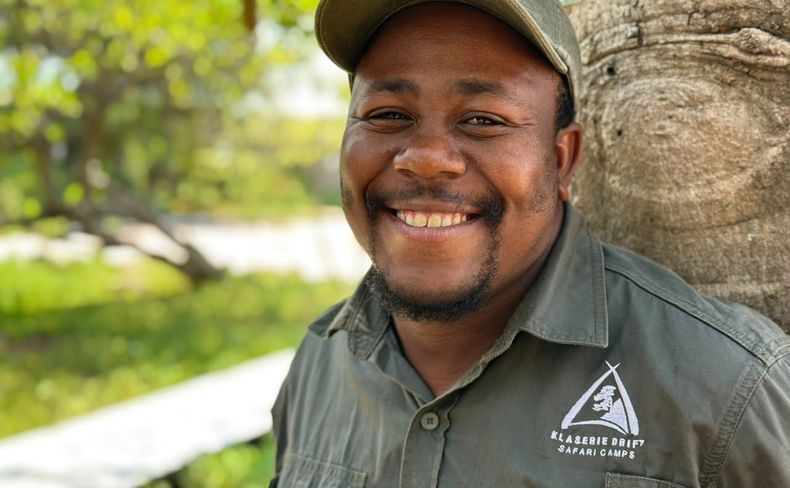
For our newest safari guide, Eden Mhlanga, a love of the bush began long before he ever considered making it his career. Growing up in a small rural village, Eden was introduced to the wonders of the African wilderness from an early age. He still remembers his very first game drive – and the moment he fell in love with the tracker seat.
Years later, that childhood fascination has grown into a career built on curiosity, experience and a genuine passion for sharing the natural world with others. Building on his years working as a tracker, Eden has developed a remarkable eye for the little details that tell the bigger stories of the bush. We're delighted to welcome Eden to the Klaserie Drift team, and we sat down with him to hear about his journey from tracker to guide, a rather frightening encounter with a leopard, and why his favourite animal might just surprise you!
Tell us a little about yourself. Where did you grow up, and what was life like there?
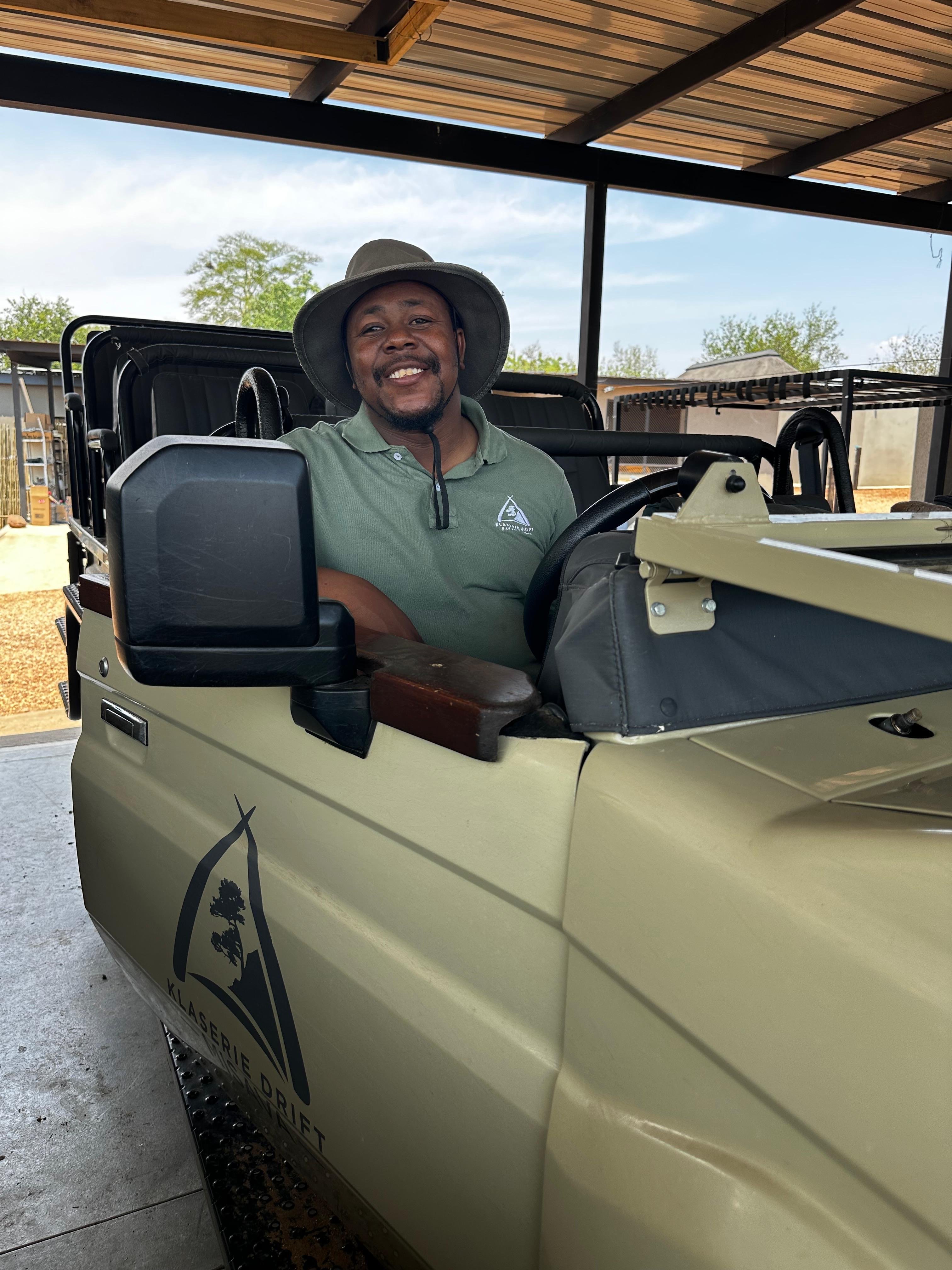
My name is Eden Mhlanga and I grew up in a small village called Utah close to the Sabi Sands Game Reserve. During my early years, I was fortunate enough to have my father working at Djuma Game Reserve. This gave me an opportunity to experience the bush from a young age. I still remember my very first game drive. I completely fell in love with the tracker seat and from that moment I knew that was where I wanted to be.
Growing up the landscape around me was more or less the same beautiful African bush that I am fortunate enough to work in today. Nature was always part of my surroundings and without me even realising it those early experiences were shaping my future.
I always thought my journey would be straight into tracking but hey nature had other plans for me! Looking back, I wouldn’t change a thing because every step has played a role in making me the person and guide I am today.
What first inspired you to work in the bush?
I’ve always loved reading books but there’s something special about being next to a flowing river, listening to birds singing and enjoying the quietness of nature. Those are the moments when I can reflect on life have a little meditation session and reconnect with myself and the natural world. I think that connection with nature is what really inspired me to work in the bush. I realised that I could make a living doing something I genuinely love while experiencing that peace and beauty every day.
And there is an added bonus: through guiding, I get to meet people from all over the world, learn about different cultures, share experiences and perspectives all without having to travel the world myself. For me being a guide is not just about showing people animals. It’s also about sharing a passion for nature, connecting with people and learning something new every day.
Did you always want to be a guide?
I actually started my career as a tracker at several different lodges. Along the way I met many incredible guides and I was always curious about their profession. I would constantly ask them what it took to become a guide, what challenges they faced and what the journey involved. I did my own research but one person who really influenced my decision was Bongani, a fellow tracker. He saw potential in me and encouraged me to study towards becoming a guide because he believed I had what it takes. That encouragement meant a lot and eventually I decided to take that step.
Bongani has been one of my biggest inspirations. I remember how we used to teach each other about animal tracks and signs, trees and bird calls. We were constantly learning from one another, sharing knowledge and growing together.
Looking back I realise that becoming a guide wasn’t just about advancing my career. It was about taking the knowledge, curiosity and passion I had developed as a tracker and finding a new way to share that with others. I’m grateful to Bongani for seeing something in me and encouraging me to pursue a path that has become such an important part of my life.
Is there something you learnt as a tracker that you think makes you a better guide today?
Oh yes, absolutely! Animal behaviour is probably one of the biggest things I’ve learnt through tracking. When you’re out tracking animals, you start noticing little things that you won’t necessarily find written in books or on the internet. You learn to read their movements, understand their reactions and recognise subtle signs in their behaviour. Sometimes it’s those small details that tell you a much bigger story about what’s happening in the bush. That’s where I learnt that experience is one of the greatest teachers. You can read as many books as you like but spending time in the bush and observing animals teaches you things that are difficult to put into words.
And as I always like to say, animals don’t read books! Ha ha!
They don’t always follow what we’ve learnt in theory and that’s what makes working in nature so fascinating. Every day brings something different and there’s always something new to learn. I think my background as a tracker has taught me to look beyond what I see, pay attention to detail and try to understand what is actually happening.
What's your favourite animal to encounter on safari, and why?
Ha ha! This is always a fun question for me to answer. I know most people might expect me to say leopard, lion or elephant, but surprisingly my favourite animal to encounter on safari is the impala! I know it’s probably not the answer people expect but I have my reasons.
First impalas play a very important role in the ecosystem, they are mixed feeders meaning they can switch between grazing and browsing depending on the availability of food. This adaptability allows them to thrive in different environmental conditions.
Secondly they are an important food source for a variety of predators for example martial eagles, rock pythons, leopards to African wild dogs and lions. Thirdly what fascinates me most is that if you take the time to observe impalas you’ll realise there is so much more happening than meets the eye: Their social behaviour, communication, alertness and relationship with predators make them incredibly interesting animals.
For me the bush isn’t only about the Big Five. Sometimes the most ordinary-looking animals have the most extraordinary stories to tell!
Tell us about one wildlife encounter you'll never forget. What happened?
There are quite a few but one encounter that will always stay with me was my very first leopard encounter on foot when I had just started my tracking career. I remember finding some very fresh leopard tracks and I was so excited. I had this incredible adrenaline rush and was determined to find that leopard but because I was so focused on finding her, I missed some very important details along the way. The leopard had killed an impala and dragged it, so I followed the trail. At some point I shifted my attention from the ground and started concentrating on the trees, trying to work out where she might have taken the kill.
Little did I know that she was much closer than I thought. Suddenly she came charging out of a thicket along the riverbed, I froze and shouted as loudly as I could. She came to within about three metres of me salivating and clearly displaying aggression. When I looked on the sides, I noticed two little cubs running away. That’s when it hit me: I had completely missed the cub tracks! It was an incredible adrenaline-filled moment, but also a very humbling experience. It taught me that tracking is not just about following footprints or finding an animal. You have to read the entire story, pay attention to every detail and understand the animal’s circumstances. Most importantly it taught me never to let excitement take over awareness and respect for wildlife.
That encounter has stayed with me throughout my career and it reminds me that the bush always has something to teach us.
What do you think makes a truly memorable game drive, beyond simply seeing the Big Five?
For me a truly memorable game drive is about allowing guests to become part of nature by engaging all their senses. I always believe that the bush has so much more to offer than just the Big Five. For example, elephants, rhinos and buffaloes often rub themselves against trees to remove ticks, mud and dead skin. Instead of simply driving past, I like pointing out those rubbing posts and allowing guests to feel the texture left behind.
Animals leave stories behind everywhere. Sometimes it’s a footprint, a broken branch, a dung pile or a scratch on a tree. If you take the time to explain these little details, guests begin to understand that the bush is constantly communicating with us, all they need is to pay attention.
Trees on the other hand are another fascinating subject because many have traditional uses and interesting stories worth sharing. Colourful birds, little creatures, insects and even wild flowers can turn an ordinary game drive into something extraordinary especially during our rainy season where you can see birds on beautiful flowers. I want guests to leave with more than photographs of lions and elephants. I want them to leave with a deeper appreciation and understanding of nature, perhaps having learnt something they never knew before because sometimes the smallest things in the bush leave the biggest impressions.
When you're not guiding, what do you enjoy doing?
When I’m not in the bush I enjoy watching soccer and spending quality time with friends. I appreciate having time to relax, laugh and catch up with the people around me. As much as I love the wilderness and everything that comes with it, I also enjoy the simple things in life. Sometimes it’s good to switch off from the bush, enjoy a good football match and just be myself. I’m just not much of a social media person rather I prefer seeing people phones away and just chit chatting.
Further Reading
More Than a Meal: Mandela Day 2026
Tue August 4, 2026
Read This Article

Ask Our Guides: Your African Wildlife Questions Answered
Wed May 27, 2026
Read This Article
Ever wondered why lions have manes or why leopards seem to spend so much time in trees? Maybe you’ve found yourself questioning how guides know a track is fresh, or why some animals are spotlighted at night while others are left in the dark. Our guides hear these questions all the time - usually somewhere between a coffee stop and a sighting! So, we thought it was time to put guides James...
Track and Sign: How Do You Find Animals in the Wild?
Tue January 28, 2025
Read This Article
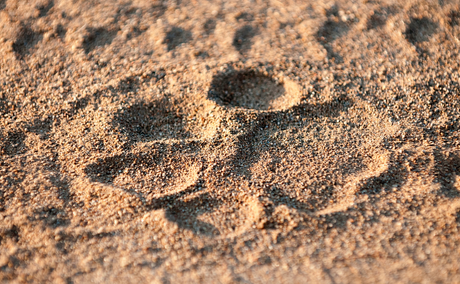
Have you ever wondered how our guides manage to find animals in the vast, unfenced wilderness? With thousands of hectares to explore, it’s easy to imagine how challenging it might seem. But for our guides, tracking is a skill honed over years of practice, observation, and connection with the natural world. It’s more than just following footprints—it’s a blend of science, art, and instinct. Let’s take a closer look at the secrets...

Share This Post