
Frequently Asked Questions
Understanding Greater KrugerWhat is the difference between Kruger National Park and a private game reserve?
Kruger National Park is a state-owned conservation area of roughly 2 million hectares, managed by South African National Parks (SANParks). It is open to the public, accessible via self-drive with your own vehicle, and entry fees are relatively affordable. Accommodation inside Kruger ranges from basic campsites to rest camps, with a small number of higher-end private concessions.
Private game reserves are privately owned and managed properties, most of which share unfenced boundaries with Kruger, allowing animals to move freely between them. Because they are private, they can set their own rules: vehicles go off-road to track animals, game drives operate early in the morning and at night, and guest numbers are deliberately limited.
The guides working in private reserves typically have advanced wildlife training, and the guiding is focused and personal rather than general and self-directed. This is why the game-viewing experience in a private reserve tends to be significantly more immersive than a self-drive day in the national park.
Klaserie Drift Safari is located in Klaserie Private Nature Reserve, on the western boundary of Kruger. Its 11,000-hectare traverse is unfenced from Kruger, meaning game roams freely and the lion or elephant you see today may have walked in from the national park overnight.
What is the Greater Kruger area?
Greater Kruger consists of the protected land on the western border of Kruger National Park. It is made up of several private reserves, including Sabi Sands, Klaserie, Timbavati, Thornybush, Manyeleti, and several others sharing unfenced boundaries between themselves and the Kruger National Park.
Together, they cover a total conservation area exceeding 2 million hectares, making it one of the largest unfenced wildlife areas in Africa. Each private reserve features its own character, density of lodges, and type of guest experience.
The advantage of Greater Kruger over standalone private reserves elsewhere in Africa is the combination of exceptional wildlife density, access to Big Five sightings, and the quality of the private lodge infrastructure built up over decades.
Klaserie Private Nature Reserve, where Klaserie Drift Safari is based, is one of the largest private reserves in Greater Kruger at approximately 60,000 hectares.
What is Klaserie Private Nature Reserve?
Klaserie Private Nature Reserve is the largest private reserve in the Greater Kruger ecosystem, covering approximately 60,000 hectares. It is a collective of private landowners who have agreed to remove internal fences, creating a single contiguous wilderness area where wildlife moves naturally.
The reserve shares an open boundary with Kruger National Park to the east, so the wildlife population is part of the broader Greater Kruger ecosystem.
Klaserie receives significantly fewer visitors than the more well-known Sabi Sand reserve to the south, which contributes to a quieter, less crowded experience. The reserve is home to lion, leopard, elephant, buffalo, and white rhino, as well as a wide range of other mammal and bird species such as rare African wild dogs.
Its size means that game drives often cover territory where you may not see another vehicle.
Klaserie Drift Safari Camps sit within an 11,000-hectare section of Klaserie, offering exclusive access to a substantial private concession within the reserve.
Which private game reserve is best in the Greater Kruger area?
There is no single answer, because each reserve in Greater Kruger has a different character and the right choice depends on what you are looking for. Sabi Sands is the most famous, with very high leopard sightings and a dense concentration of lodges, but it is also the most visited and consequently more expensive. Timbavati is known for its white lions, though these sightings are extremely rare. Klaserie is one of the largest and least crowded reserves, attracting guests who want a more private, less congested experience without compromising on wildlife diversity. For guests who prioritize space, privacy, and the feeling of having the bush to themselves, the less-trafficked reserves tend to deliver a more authentic experience. Klaserie Drift Safari operates an 11,000-hectare private concession within Klaserie, further limiting exposure to other lodges during game drives.
Is it better to stay inside Kruger National Park or at a private reserve?
Both options have merits, but they deliver fundamentally different experiences.
Staying inside Kruger National Park on a self-drive safari is more affordable, but you are one of potentially thousands of visitors on a given day driving on public roads, with game drives stopping at sunset. You cannot go off-road or conduct night drives by yourself.
A private reserve adjacent to Kruger gives you exclusive guiding, smaller group sizes, off-road access to track animals across open terrain, morning and evening game drives, night drives after dark, and often bush walks with a trained field guide.
The accommodation quality is also typically higher, with many private lodges offering a more comfortable and personal environment than the national park's rest camps.
For first-time visitors or those with limited time who want to maximise their wildlife sightings, a private reserve usually delivers a more intensive and memorable safari.
For budget-conscious travellers or those who enjoy the independence of self-drive exploration, the national park is excellent.
Klaserie Drift Safari Camps combines private reserve game viewing with two intimate lodges on an 11,000-hectare concession, meaning all the advantages of a private game reserve without the crowds typical of the most commercial lodges.
Best Time to VisitWhen is the best time of year for a safari in South Africa?
The dry season, from May to September, is often considered the best time for game viewing in Greater Kruger and most of South Africa's bushveld regions. During these months, vegetation thins out as trees lose their leaves, making animals easier to spot.
More importantly, surface water dries up, and game concentrates around permanent waterholes and rivers, increasing the frequency and reliability of sightings. Temperatures are cooler, particularly in the early morning and evening, which is when game drives operate.
The wet season, from late October through April, brings lush green landscapes, newborn animals, and extraordinary birdwatching as migratory species arrive. Sightings can be slightly harder because of the dense vegetation, but predator activity often increases around calving season (November to January).
Temperatures are higher, and thunderstorms may occur - but they are usually short-lived. Overall, many guests prefer June through September for the optimal combination of excellent game viewing, comfortable temperatures, and reliable conditions.
However, all seasons offer something unique and compelling. It’s also worth noting that your choice of lodge and location is usually a more significant factor than season when it comes to game viewing in general.
Klaserie Drift Safari operates year-round, and the lodge team can advise on what to expect during each season based on current conditions.
What is the dry season like in Greater Kruger?
From May to September, Greater Kruger undergoes a dramatic transformation. Deciduous trees shed their leaves, the grass turns golden and low, and the landscape opens up to reveal animals that would be hidden in the green season.
Water points become critical, and large herds of buffalo, elephant, impala, and zebra converge on permanent rivers and waterholes. This predictability makes it easier to plan a game drive around known water sources and can increase the chances of witnessing predator-prey interactions.
Temperatures during the dry season are pleasant for most of the day, typically 20 to 28 degrees Celsius in the afternoon. However, mornings on open game drive vehicles can be cold, particularly in June and July when temperatures at dawn can drop to 5 to 8 degrees Celsius in the lowveld.
Layers are essential. The air is dry and clear, making for excellent photography conditions.
At Klaserie Drift Safari Camps, dry season game drives frequently follow the Klaserie River corridor, where elephant, buffalo, and lion concentrate as surface water recedes across the broader landscape.
Is it worth visiting Greater Kruger during the wet season?
Yes, though for different reasons than the dry season.
From November to March, the landscape turns vivid green after the first rains, flowers bloom, and migratory birds arrive from Europe and central Africa. Calving season begins around November, and this draws predators actively hunting young animals, which can produce some of the most dramatic wildlife sightings of the year.
Game viewing can require more patience during the wet season because animals disperse across the landscape when water is plentiful, and vegetation reduces visibility.
However, afternoon game drives in lush bush with the scent of rain on the ground offer a completely different atmosphere from the arid dry season. Fewer tourists also visit during this period, which translates to a more private experience.
Klaserie Drift Safari Camp's 11,000-hectare concession means there is substantial territory to cover whatever the season, and the lodge's expert guides are skilled at locating wildlife.
Getting to KlaserieHow do I get to the Greater Kruger area from Johannesburg?
There are two main options: fly or drive.
The quickest is a short domestic flight from OR Tambo International Airport in Johannesburg to either Hoedspruit Eastgate Airport or Kruger Mpumalanga International Airport (KMIA) near Nelspruit. These flights take approximately one hour and operate daily via Airlink and other regional carriers.
Most lodges offer a transfer service to bring you directly to their property, typically taking another 30 to 90 minutes depending on the location of the lodge and arrival airport.
The drive from Johannesburg takes approximately 5 to 6 hours via the N4 or N12, depending on your destination within Greater Kruger. It is a straightforward journey on good roads, and many guests choose to self-drive if they plan to spend several nights and want the flexibility of arriving on their own schedule.
For guests travelling to Klaserie Drift Safari Camps, Hoedspruit Eastgate Airport is the closest and most convenient option, with both lodges approximately 45 to 60 minutes from the terminal.
Is it better to fly or drive to a safari lodge in Greater Kruger?
Both work well, and the choice depends mostly on your schedule and preferences.
Flying is faster, requires no navigation in unfamiliar territory, and allows you to start relaxing as soon as you leave Johannesburg. The small regional airports that serve Greater Kruger are low-stress, and the transfer from airport to lodge is typically handled by the property itself. If you have limited time in South Africa, flying maximises your days in the bush.
Driving gives you flexibility, the chance to stop along the way, and often lower overall costs if you are a group. The main roads from Johannesburg to the Limpopo and Mpumalanga lowveld are well-maintained, with some short sections of smaller roads vulnerable to potholes.
The final stretch into many private reserves is on dirt roads, which are passable in a standard vehicle during the dry season, though a high-clearance vehicle is sometimes preferable.
Driving also means you can easily add extra days to explore the Panorama Route, Blyde River Canyon, or other attractions in the region.
Klaserie Drift Safari Camps offers airport transfers from Hoedspruit for guests who fly in, which removes any uncertainty about the final leg of the journey.
What airport should I fly into for a Klaserie safari?
Hoedspruit Eastgate Airport is the closest airport for most lodges in the Klaserie Private Nature Reserve. It sits in the town of Hoedspruit, which is the main service hub for much of the central and western Greater Kruger area.
Flights from Johannesburg's OR Tambo International Airport take around one hour, with daily services operated by Airlink. The airport is small and easy to navigate, and the transfer to a lodge within Klaserie typically takes 45 to 60 minutes.
An alternative is Kruger Mpumalanga International Airport (KMIA) near Nelspruit, which handles international connections as well as domestic routes. It serves the southern and eastern sections of Greater Kruger better than the west, so for Klaserie specifically it involves a longer transfer of around 3 hours.
For guests visiting Klaserie Drift Safari Camps, Hoedspruit is the recommended airport. The lodge coordinates transfers directly from the terminal.
Wildlife and Safari ActivitiesCan you see the Big Five in Klaserie Private Nature Reserve?
Yes. Klaserie Private Nature Reserve is home to all of the Big Five: lion, leopard, elephant, buffalo, and rhino.
Because Klaserie shares an open boundary with Kruger National Park, its wildlife population is part of the broader ecosystem. It includes large herds of elephant and buffalo, as well as multiple lion prides and leopard territories.
White rhino sightings occur regularly, though the rarer black rhino is much less predictable.
Beyond the Big Five, Klaserie has a healthy population of wild dog, which are among the most sought-after and charismatic animals in Africa. Other key species include hyena and hippo.
The reserve also supports an impressive diversity of plains game, including giraffe, zebra, kudu, waterbuck, and impala.
Klaserie Drift Safari Camp's guides have extensive knowledge of the animal territories and movement patterns within their 11,000-hectare concession. Before each game drive, they regularly brief guests on what has been tracked in the area.
What animals can I expect to see on safari in Greater Kruger?
Greater Kruger supports one of the most diverse mammal assemblages in Africa. Beyond the well-known Big Five (lion, leopard, elephant, buffalo, rhino), you are likely to encounter giraffe, zebra, wildebeest, hippo, crocodile, wild dog, hyena, jackal, warthog, baboon, and vervet monkey.
The area is also home to numerous antelope species, including kudu, impala, waterbuck, nyala, steenbok, and bushbuck. Smaller predators such as honey badger, civet, and genet can also be found throughout the region.
Birdlife is exceptional, with over 500 species recorded in the Greater Kruger area. The ground hornbill, saddle-billed stork, martial eagle, lilac-breasted roller, and various kingfisher and bee-eater species are among the most visually striking.
What you see on any given drive depends on season, time of day, the specific habitat of the lodge's concession, and some degree of luck.
Private reserves like Klaserie typically offer more intensive and dedicated game viewing than a self-drive in Kruger National Park, with guides able to follow tracks and spend extended time with individual animals.
Klaserie Drift Safari Camp's concession includes open savannah, riverine forest, and rocky terrain, supporting a wide range of species.
What is a night game drive and where can you do one in South Africa?
A night game drive takes place after sunset, typically starting around 6pm, and uses a powerful spotlight to locate animals in the dark.
Some key species, like leopard and lion, are crepuscular (most active at dawn and dusk), whilst others are nocturnal (most active at night). These include honey badger, porcupine, civet, genet, bushbaby, and various owls and nightjars.
A night drive routinely reveals behaviour and species that are never encountered on daytime drives.
Night drives are permitted in private game reserves, though not for self-drive safaris in Kruger National Park. Because the national park closes to public vehicles at sunset, this is one of the key advantages of staying at a private reserve.
Night drives are typically led by a professional field guide with a tracker who operates the spotlight from a seat at the front of the open vehicle.
Klaserie Drift Safari Camps includes night game drives as part of the standard safari programme.
What is the difference between a game drive and a bush walk on safari?
A game drive uses an open 4x4 vehicle to cover distance across the bush, following roads, tracks, and open terrain to locate wildlife. The vehicle elevation, combined with the guide’s expertise, allows you to observe animals from a safe distance without disturbing them.
Most safari activity is done by game drive because it is the most effective way to find a wide range of species efficiently.
A bush walk happens on foot, accompanied by one or two armed professional field guides. The pace is slower, and the focus shifts from volume to depth.
On a walk you notice things invisible from a vehicle: insect trails, animal footprints, medicinal plants, the scent of a leopard’s territorial marking, and the way termite mounds regulate temperature. You also perceive the landscape differently at ground level.
Bush walks are done in small groups and demand attentiveness, but for many guests they become the most memorable part of the safari.
At Klaserie Drift Safari Camps, game drives are conducted twice daily, with guests able to book a guided bush walk in advance should they want to experience one.
Health and Practical InformationIs Klaserie a malaria area?
Yes. The Greater Kruger area, including Klaserie Private Nature Reserve, falls within a malaria-risk zone. The risk is classified as low to moderate and is seasonal, peaking during the wet summer months (November to April) when mosquito populations increase.
During the dry winter months (May to September), the risk is significantly lower, though not zero.
Most medical authorities recommend antimalarial prophylaxis for visitors to the Greater Kruger area, and you should consult your doctor or a travel medicine specialist before departure.
Common prophylaxis options include Malarone (atovaquone-proguanil), doxycycline, and mefloquine. Your doctor will advise on the most appropriate based on your health history.
In addition to medication, standard precautions apply: use effective mosquito repellent, and wear long sleeves and trousers after sunset.
At Klaserie Drift Safari Camps, the lodge teams can provide updated guidance on current conditions, though it is always best to consult your doctor for medical advice.
What should I pack for a safari in Greater Kruger?
Packing for a safari is simpler than many first-time visitors expect. In terms of clothing, neutral tones — khaki, olive, beige, grey, and light brown — are standard and appropriate.
Though not forbidden, bright, white, or dark colours may stand out, with the latter prone to attracting flying insects. Camouflage is sometimes restricted in southern Africa, so it is best avoided.
For the dry winter season, layers are essential. Early morning game drives can be cold (5 to 10 degrees Celsius in June and July), and you will be sitting in an open vehicle in moving air.
A warm fleece or jacket, scarf, gloves, and a hat make a significant difference. By midday, temperatures are warm, so layers that can be easily removed are practical.
Other essentials include good-quality insect repellent, sunscreen, sunglasses, a broad-brimmed hat, binoculars, and a camera with adequate battery capacity for full days in the bush.
Most lodges do provide laundry facilities, so you do not need to overpack.
Klaserie Drift Safari Camps provides a detailed packing guide to all confirmed guests before their arrival, and the lodge has a small boutique for items that may have been forgotten.
How long should I spend on safari in South Africa?
A minimum of three nights is generally recommended for a meaningful safari experience.
On the first day, most guests are still adjusting — to the sounds, the pace, and the unfamiliar landscape. By the second day, your eye begins to calibrate to the bush, and you start noticing details that were invisible on arrival.
By the third day, you are in rhythm with the morning and evening drive structure, the animals feel familiar, and you start reading the environment rather than reacting to it.
Four to five nights gives you time to absorb multiple different experiences without the pressure of each drive feeling like your last chance. Longer stays also allow the guides to take you to different areas of the concession based on where game has been active.
For South Africa trips that combine a safari with other destinations (Cape Town, the Garden Route, the Winelands), a typical structure is three to five nights on safari and three to five nights elsewhere.
Klaserie Drift Safari Camp's calm rhythm and boutique lodges make it particularly well suited to guests who want to settle in rather than pass through.
Is a South Africa safari suitable for first-time safari-goers?
Yes, and Greater Kruger is one of the best safari destinations in Africa for first-timers.
The combination of excellent wildlife density (Big Five reliably present), world-class guiding infrastructure, and high standards of accommodation means that first-time visitors can typically expect rewarding sightings without needing prior knowledge or experience.
South Africa also has practical advantages over some other safari destinations: no language barrier for English speakers, a well-developed tourism industry, relatively straightforward logistics, and a range of price points that make it accessible across different budgets.
Private reserves within Greater Kruger are particularly good for first-timers because the guiding is educational and immersive.
Guides explain animal behaviour, ecology, and tracking as the drive unfolds, which means you come away not just with sightings, but with understanding.
Boutique lodges with small guest counts, like Klaserie Drift Safari Camps, add a personal dynamic that makes the introduction to the African bush especially memorable.
Safari Experiences and AccommodationHow is a South Africa safari different from a Kenya or Tanzania safari?
Kenya and Tanzania are famous for the Great Migration — the annual movement of over 1.5 million wildebeest, zebra, and gazelle between the Serengeti and the Masai Mara — and for vast open grassland plains that offer panoramic wildlife spectacles. These are undeniably extraordinary experiences.
South Africa's Greater Kruger area offers a different type of safari. The landscape is more varied — bushveld, riverine forest, rocky koppies, and thornveld — and game viewing is often more intimate and detailed, with guides tracking individual animals on foot or by vehicle across diverse terrain.
The Big Five are all present, and leopard in particular is more reliably sighted in Greater Kruger than in most of East Africa.
Practically, South Africa is generally easier and more affordable to reach from Europe, has a more developed tourism infrastructure, and combines well with other destinations like Cape Town or the Garden Route.
The lodge quality in South Africa's private reserves is among the highest in Africa.
Klaserie Drift Safari Camp's positioning in the less-commercialised Klaserie reserve adds a layer of privacy and space that reinforces the feeling of being genuinely in the wild rather than in a well-travelled tourism circuit.
What does all-inclusive mean at a safari lodge?
All-inclusive at a safari lodge is not the same as all-inclusive at a beach resort.
At a typical safari lodge, the rate covers accommodation, all meals (including bush breakfasts and sundowners served in the field), twice-daily game drives, guided bush walks, and all non-premium beverages including wine, beer, spirits, and soft drinks.
What is typically not included: international flights, transfers (sometimes charged separately), conservation levies, premium or imported spirits, laundry, spa treatments, private vehicle hire, and any optional activities beyond the standard game drive programme. Some lodges also charge a single supplement for solo guests.
The all-inclusive model exists at safari lodges because the activity and meal schedule is structured: drives at dawn and dusk, meals in between, and sundowners in the field.
It removes the need to make decisions about food and drink costs on the spot, which contributes to the unhurried atmosphere that defines a good safari.
At Klaserie Drift Safari Camps, the all-inclusive rate is designed to cover the full experience from arrival to departure with minimal additional costs.
What is a boutique safari lodge?
In the safari context, 'boutique' refers to a lodge that deliberately limits the number of guests to create a more personal experience.
While larger lodges in Greater Kruger can accommodate 30, 40, or even more guests at a time, a boutique lodge typically has between 6 and 16 rooms.
The small guest count means that game drives go out in smaller vehicles with fewer people, the guiding can be tailored to the interests and pace of each group, and the atmosphere at meals and around the fire feels more like staying with friends than at a hotel.
Boutique lodges also tend to have a stronger individual identity than larger properties. The food, the guiding style, the design of the spaces, and the relationships the staff build with guests are all more pronounced when the operation is small.
Klaserie Drift Safari Camps offers two intimate lodges of 8 to 10 suites, with game drives typically going out in groups of six or fewer.
What makes a safari lodge sustainable?
Sustainability in safari lodges covers several distinct dimensions: energy production, water use, waste management, community involvement, and active contribution to conservation.
Genuinely sustainable lodges minimise or eliminate their dependence on fossil fuels, reduce single-use plastics, manage water from boreholes responsibly, engage and employ people from surrounding communities, and contribute financially or practically to wildlife and habitat conservation.
The critical distinction is between lodges that make broad sustainability claims and those that can point to specific, measurable actions and outcomes.
Figures like carbon offset volume, number of indigenous plants cultivated, or kilograms of plastic eliminated are more meaningful than general statements about caring for the environment.
Klaserie Drift Safari Camps runs entirely on solar power, has eliminated single-use plastic from its operations, and has planted over 2,400 Spekboom plants as part of a carbon capture programme.
Spekboom is a South African succulent known for its exceptional ability to sequester carbon dioxide, and it is a measurable, native contribution to the landscape.
The lodge has preserved over 1,000 trees on its concession and reduced its verified CO2 output by more than 19,000 kilograms.
About Klaserie Drift SafariWhat kind of lodge is Klaserie Drift Safari Camps?
Klaserie Drift Safari Camps comprises two boutique safari lodges with eight to ten suites, set on an 11,000-hectare private concession within the Klaserie Private Nature Reserve in the Greater Kruger ecosystem.
The lodges are positioned in the casual luxury segment: the environment is authentic and genuinely wild, the comfort is high, and the atmosphere is deliberately unpretentious. It is not a formal or grand hotel experience transplanted into the bush, but a setting where the primary focus is the landscape and the wildlife, supported by well-considered food, attentive service, and accommodation that feels at home in its surroundings.
All stays are all-inclusive, covering twice-daily game drives, meals, and beverages. The entire operation runs on solar power, uses no single-use plastic, and engages in active carbon capture through a Spekboom planting programme. With a maximum of 16 guests at any one time, the experience is genuinely private and personal.
What makes Klaserie Drift Safari Camps different from other lodges in Greater Kruger?
Three things set Klaserie Drift Safari Camps apart.
First, scale and privacy. Their two lodges – Amani and Misava – have eight to ten suites and traverse 11,000 hectares, which is a generous ratio of space to guests. Many lodges in Greater Kruger have a higher density of both rooms and vehicles. At Klaserie Drift, you are not competing with other vehicles at a sighting, and the land feels proportionate to the experience.
Second, measurable sustainability. Many lodges describe themselves as environmentally responsible, but Klaserie Drift publishes specific figures: 100% solar energy, 19,210 kg of CO2 reduced, 2,464 Spekboom plants, 5,200 single-use plastic bottles eliminated, and 1,060 trees preserved. These are verified outcomes, not aspirational statements.
Third, a consistent track record of high guest satisfaction, with ratings above 9 out of 10 across review platforms. At that scale, every guest interaction is personal, and the quality of each stay is felt directly by the team that owns and operates the lodge.
How many guests does Klaserie Drift Safari Camps host at once?
Klaserie Drift Safari Camps has two lodges – Amani and Misava – each featuring eight to ten suites, which means a maximum of twenty guests per lodge when all suites are occupied, though this is often fewer.
This guest count is deliberately low. It means that game drives go out in small vehicles, dining is an intimate occasion rather than a busy restaurant, and the team has time to know each guest individually within the first day of their stay.
The smaller footprint at Klaserie Drift directly affects the quality of every interaction, from the guide who can adapt a drive to a guest's specific interest in birds or predators, to the kitchen that can accommodate dietary preferences without compromise.
Sustainability & ConservationHow sustainable is Klaserie Drift Safari Camps?
Klaserie Drift Safari operates on 100% solar energy, with no diesel generators used for standard lodge operations. All single-use plastic has been eliminated from the property, with reusable alternatives in place throughout — this accounts for the elimination of over 5,200 plastic bottles. Wherever possible, the kitchen champions a zero-waste philosophy and sources locally.
On the conservation side, the lodge has been actively involved in a Spekboom planting programme. Spekboom (Portulacaria afra) is a South African succulent with a documented carbon sequestration rate significantly higher than most temperate forests.
To date, 2,464 Spekboom plants have been established on the concession. Combined with the preservation of 1,060 trees and landscape management practices, the lodge has reduced its verified CO2 output by more than 19,210 kilograms.
These are not aspirational targets but recorded outcomes. For guests for whom environmental responsibility is a real factor in choosing a lodge, Klaserie Drift can provide documentation of its sustainability programme on request.
What does Klaserie Drift Safari Camp's sustainability commitment mean in practice?
In practical terms, a stay at Klaserie Drift Safari Camps looks and feels different from a lodge that has not made these investments.
There are no single-use plastic water bottles in the rooms or at the safari vehicle — reusable bottles are standard, and filtered water is available throughout the property.
Energy supply is solar, which means the lights, air conditioning, kitchens, and water heating all run without burning diesel. The lodge is typically quieter as a result, and the environmental footprint is substantially lower.
On game drives, guides integrate conservation context into their interpretations of animal behaviour and habitat, adding an additional layer to the experience.
From the guest perspective, the sustainability programme does not require any change in comfort or experience. It is something the lodge has built into its operations so that the experience feels right rather than compromised.
Suites & AccommodationWhat are the suites like at Klaserie Drift Safari Camps?
The suites at Klaserie Drift Safari Camps are designed to sit comfortably within the bush environment rather than stand apart from it. Materials, colours, and textures are drawn from the landscape: earthy tones, natural wood, and stone. The overall aesthetic is what the lodge describes as casual luxury — high comfort standards without the formality of a grand hotel.
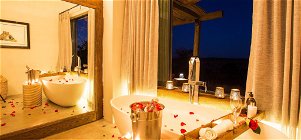
Whether at Amani or Misava lodge, each suite is spacious and offers a private outdoor area for guests to sit in the bush without leaving their accommodation. Some also feature private plunge pools and additional perks such as separate living areas and a starbed deck.
The positioning means you can hear the sounds of the reserve from your veranda, spot animals at any time of day, and feel genuinely embedded in the environment.
Facilities include air conditioning for the warm season, ceiling fans, ensuite bathrooms, and all the practical elements of a well-appointed room.
Safari Activities & GuidingWhat safari activities are included at Klaserie Drift Safari Camps?
The standard activity programme at Klaserie Drift Safari Camps includes twice-daily game drives (morning and evening/night), with coffee and sundowners in the field. Guided bush walks are also bookable in advance. These are all included in the all-inclusive rate.
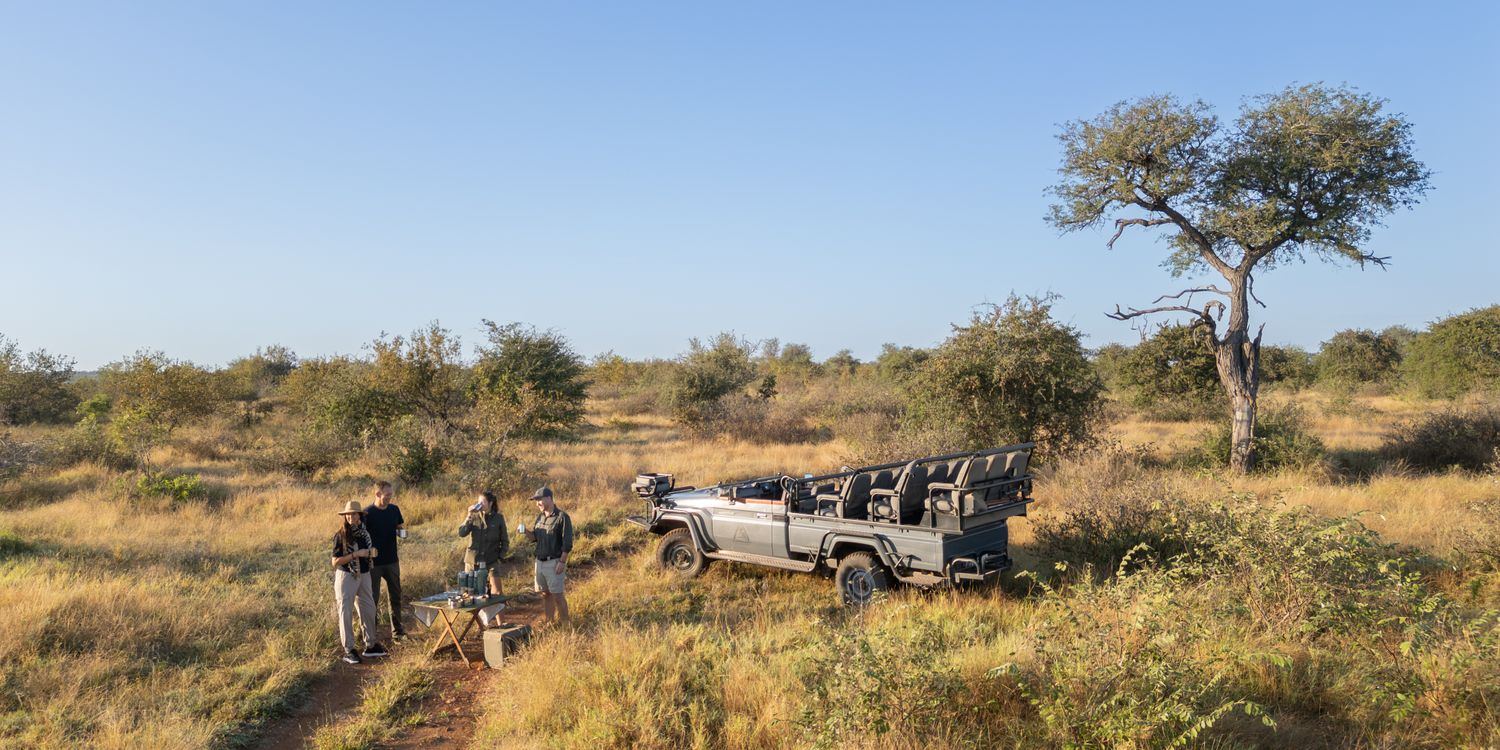
Morning drives typically begin before sunrise, taking advantage of the cool hours when predators and other animals are most active. The drive pauses mid-morning for a freshly brewed coffee or hot chocolate in the field before returning to the lodge.
Evening drives depart late afternoon, transition through sunset, and continue as a night drive with a spotlight, returning to the lodge after dark. Sundowners — drinks served at a scenic spot in the bush as the sun sets — are a standard part of the evening programme.
All activities take place within the lodge's 11,000-hectare concession.
What are the guides like at Klaserie Drift Safari Camps?
The guides at Klaserie Drift Safari Camps hold professional field guide qualifications and many years of experience, both locally and in other reserves across the country.
In a small lodge environment, guides develop real relationships with repeat guests and can adapt the focus of a drive — to a particular animal, to birds, to trees, to predator tracking — based on what guests want from the experience.
Because Klaserie Drift hosts a maximum of twenty guests per lodge, the guide team is not managing a high-volume operation. There is time to stop, look, and explain. A lion sighting at a boutique lodge means staying with the animals until the story unfolds, rather than moving on because the next vehicle needs access.
Do game drives at Klaserie Drift Safari Camps go off-road?
Yes. Being located in a private nature reserve rather than the national park means that vehicles at Klaserie Drift Safari Camps can follow animals off established roads and into open terrain.
This is one of the defining advantages of a private reserve: when a leopard moves into a thicket or a pride of lions changes direction, the vehicle can follow.Off-road driving is done carefully and with respect for both the vegetation and the animals.
Guides assess when it is appropriate to leave the track and when to observe from a distance. The result is a much more intimate and flexible game-viewing experience than the national park's requirement to remain on public roads at all times.
Are night game drives available at Klaserie Drift Safari Camps?
Yes. Evening drives at Klaserie Drift Safari Camps transition naturally into night drives as the sun sets. The vehicle is equipped with a high-powered spotlight, which allows the guide to illuminate nocturnal animals after dark without disturbing them.
Night drives regularly produce sightings that are more difficult to encounter during the day: leopard and hyena on the move, honey badger, porcupine, civet, genet, bushbaby, and various owl species. In winter months, lions are also frequently active and vocal at night.
The atmosphere of a night drive in an open vehicle, in complete darkness except for the beam of the spotlight, is unlike anything else in the safari experience and is one of the aspects guests most frequently describe as the highlight of their stay.
Dining & All-InclusiveWhat is the food like at Klaserie Drift Safari Camps?
Dining at Klaserie Drift Safari Camps is designed around the rhythm of the safari day. Freshly brewed coffee, hot chocolate, and snacks are served in the field during the morning drive, typically in a scenic location with open views.
Breakfast and lunch back at the lodge are relaxed and spaced around the midday rest before the afternoon drive.
Dinner is served back at the lodge, often around a boma fire under the stars, with the sounds of the bush as a backdrop.
The food style is a blend of fine dining and contemporary South African: seasonal produce, local ingredients where possible, preparations that are flavourful without being elaborate.
The kitchen can accommodate dietary requirements including vegetarian, vegan, and gluten-free menus when notified in advance. All meals are included in the all-inclusive rate, as are beverages including South African wines, beers, spirits, and soft drinks throughout the day and evening.
Is Klaserie Drift Safari Camps fully all-inclusive?
Yes. The all-inclusive rate at Klaserie Drift Safari Camps covers accommodation, all meals (breakfast, lunch, dinner, plus snacks), twice-daily game drives, and beverages including South African wines, beers, spirits, and non-alcoholic drinks.
What is not included in the standard rate: international and domestic flights, conservation levies, airport transfers (check directly with the lodge as these vary by arrangement), premium imported spirits and Champagne, spa treatments where available, and any specialist activities arranged outside the standard programme.
The all-inclusive model reflects the lodge's philosophy of creating a stay where guests can be fully present in the experience without calculating costs at every meal or activity. Most guests find that beyond flights and transfers, there is very little additional expenditure required.
Who Is It For?Is Klaserie Drift Safari Camps good for a honeymoon or romantic trip?
Yes. Klaserie Drift Safari Camps is well suited to couples, and particularly to honeymoons and anniversary trips. The combination of just eight to ten suites per lodge (meaning a maximum of twenty guests, and frequently fewer), private outdoor spaces, all-inclusive dining in a boma setting, and the intensity of the shared experience on game drives creates an environment that is naturally conducive to time together without distractions. The bush has a way of reorienting attention.
The absence of phone signal in many areas, the early wake-up calls, the adrenaline of a lion sighting, and the calm of a sundowner at the end of a drive all work together to make the experience feel significant.
For guests planning a honeymoon, the team can coordinate special arrangements — private dinners, bottles of Champagne, specific room preparations — when notified at the time of booking.
Is Klaserie Drift Safari Camps suitable for families with children?
Klaserie Drift Safari Camps welcomes families, but prospective guests should note that the safari environment has specific considerations for young children.
Game drives involve open vehicles and can be physically demanding in terms of early mornings, long hours on rough terrain, and variable temperatures. The presence of dangerous wildlife means that children need to remain seated and calm throughout drives, which can be challenging for very young guests.
As a result, families with children under 6 should contact the reservations team before booking to discuss the suitability. For older children and teenagers with an interest in wildlife, a safari at Klaserie Drift can be a formative experience.
Is Klaserie Drift Safari Camps good for solo travellers?
Yes, though solo travellers should factor in the single supplement, which most lodges in Greater Kruger apply when a suite is occupied by one person. The small guest count at Klaserie Drift actually works in favour of solo travellers in the social sense: meals around the boma and shared game drives in small vehicles naturally create a genuine atmosphere rather than the isolated feeling that can come with larger properties.
For solo travellers who are visiting for the first time, a boutique lodge with a tight-knit team and personal guiding style is often a more comfortable entry point than a larger, more anonymous operation. The guides have time to develop a focused rapport, and the experience feels tailored rather than generic.
Solo travellers should check the current single supplement policy with the lodge at time of enquiry, as pricing structures vary.
Location & AccessibilityWhere exactly is Klaserie Drift Safari Camps located?
Klaserie Drift Safari Camps is located within the Klaserie Private Nature Reserve, which lies on the western boundary of Kruger National Park in Limpopo Province, South Africa.
The lodge traverses 11,000 hectares within the reserve, with access to over 10km of river frontage. The Klaserie River is a seasonal waterway that runs through the reserve, attracting game throughout the year and particularly during the dry season when it serves as a critical water source.
The nearest town is Hoedspruit, which lies approximately 60 minutes from the lodge by road and serves as the main logistics hub for the western Greater Kruger area. Hoedspruit Eastgate Airport is the nearest commercial airport.
How far is Klaserie Drift Safari Camps from Hoedspruit?
Klaserie Drift Safari Camps is approximately 60 minutes from Hoedspruit by road. The route includes a section on paved roads through Hoedspruit and the surrounding area, followed by a section on gravel roads into the reserve.
The exact transfer time depends on current road conditions and any wildlife you meet along the way. The lodge arranges transfers from Hoedspruit Eastgate Airport for arriving guests, and the team coordinates timing to align with incoming flight schedules.
How far is Klaserie Drift Safari Camps from Johannesburg?
Klaserie Drift Safari Camps is approximately 500 km from Johannesburg by road, a journey of roughly 6 hours depending on traffic and the specific route taken. Most guests arriving by road use the N12 or N1 heading east, then north through the Lowveld.
The faster option for most travellers is to fly. Direct flights from Johannesburg's OR Tambo International Airport to Hoedspruit Eastgate Airport take approximately one hour, with daily services available. Combined with the 45 to 60 minute transfer from the airport, the total journey time from OR Tambo door to lodge is around 2.5 hours when flights align well.
Travel & ArrivalHow do I get to Klaserie Drift Safari Camps?
The most convenient route is to fly from Johannesburg OR Tambo International Airport to Hoedspruit Eastgate Airport, a journey of approximately one hour on daily Airlink services.
From Hoedspruit, the lodge coordinates a transfer that takes approximately 45 to 60 minutes to the property. For guests driving from Johannesburg, the journey takes approximately 6 hours by road, heading east and then north through the Lowveld.
The last section of the route is on gravel roads inside the reserve. A standard vehicle handles the route adequately in dry conditions; high clearance is helpful but not essential.
Guests are advised to contact the lodge directly at the time of booking to confirm the most current directions, gate access information, and transfer logistics, as these can vary.
Does Klaserie Drift Safari Camps offer airport transfers?
Yes. Klaserie Drift Safari Camps arranges transfers from Hoedspruit Eastgate Airport for arriving and departing guests.
Transfer arrangements and any associated costs should be confirmed directly with the lodge at the time of booking. The team coordinates timing with flight schedules to ensure a smooth arrival, particularly as the last section of the road into the concession passes through the reserve and has specific gate access procedures.
Can I self-drive to Klaserie Drift Safari Camps?
Yes, self-drive is an option. Klaserie Drift Safari Camps will provide detailed directions including gate access codes and procedures when you confirm your booking.
The route from Johannesburg takes approximately 6 hours on paved roads before transitioning to gravel tracks within the reserve. A standard sedan handles the journey adequately in dry conditions, though a vehicle with some ground clearance is more comfortable on the final reserve roads.
It is important to plan your arrival to reach the lodge before dark, both for safety on the reserve roads and to avoid navigating unfamiliar terrain at night. The lodge team will advise on recommended arrival windows when you book.
Note that vehicle security at the lodge is available, and there is no need to leave your car unattended at an airport or intermediate location.
What are the check-in and check-out times at Klaserie Drift Safari Camps?
Standard check-in is in the early afternoon, timed to allow guests to settle before the first afternoon game drive. Check-out is in the morning, typically after breakfast and the morning game drive, allowing you to make the most of your final day.
Exact times should be confirmed with the lodge at the time of booking, as they can adjust depending on the activity schedule and the needs of other guests on the same dates.
Guests arriving early by prior arrangement may be able to join an activity before formal check-in, depending on availability. Similarly, late departures can sometimes be accommodated when the lodge is not fully booked. The team is best placed to advise on both scenarios.
Reservations & PoliciesHow do I book a stay at Klaserie Drift Safari Camps?
Reservations can be made directly through the Klaserie Drift Safari Camps website or by contacting the reservations team by email or phone. Direct booking allows you to communicate preferences, dietary requirements, any special occasion details, and transfer logistics from the outset.
The team responds to enquiries directly and can advise on availability, seasonal considerations, and how best to structure your stay. Klaserie Drift Safari Camps is also available through selected travel specialists and safari operators who know the property well and can assist guests who prefer to book as part of a broader South Africa itinerary.
For first-time visitors combining safari with other South African destinations, working with a knowledgeable travel specialist can add value to the overall trip planning.
What is the cancellation policy at Klaserie Drift Safari Camps?
Cancellation policies vary depending on the booking channel used and the time of year. As both Misava and Amani are small lodges, a last-minute cancellation has a more significant impact on revenue than it would at a larger property, and the lodge's policies reflect this. Full details of the cancellation policy, including deposit requirements and any fees associated with changes or cancellations at different stages, are provided at the time of booking and form part of the booking confirmation.
Guests are strongly advised to arrange comprehensive travel insurance that covers safari bookings, including cancellation, curtailment, and medical coverage. This is particularly relevant for international travellers for whom any disruption to flights or health would otherwise result in the loss of a non-refundable reservation.
Should I book directly with Klaserie Drift Safari Camps or through a travel agent?
Both options have merit depending on your circumstances.
Booking directly with the lodge gives you the most direct communication, the ability to discuss your specific needs in detail, and usually the widest choice of dates and suite types. The reservations team can answer questions that a third-party booking engine cannot.
Using a reputable safari specialist or travel agent adds value if you are building a broader itinerary across South Africa, if you want expert input on how to combine Klaserie Drift with other destinations, or if you are new to planning a safari and want a guiding hand through the process.
A good safari specialist who knows Klaserie Drift will have visited the property and can provide a more personalised recommendation than a general travel platform.
For guests booking Klaserie Drift as a standalone destination and who are comfortable planning their own travel, a direct booking is entirely sufficient.
What is the minimum stay at Klaserie Drift Safari Camps?
There is no required minimum stay at Klaserie Drift Safari Camps, although three nights is recommended.
A minimum of three nights allows time to settle into the safari rhythm, complete multiple morning and evening drives, and begin to feel genuinely at home in the environment. Stays of two nights or fewer rarely allow enough time to get the full value of the experience, particularly given the travel involved in reaching a private game reserve.
For guests with limited time, three nights is achievable when combined with an efficient flight from Johannesburg.
Planning Your StayWhat should I pack for a stay at Klaserie Drift Safari Camps?
Regarding clothing, it is best to stick to neutral tones (khaki, olive, beige, grey, muted brown) and avoid bright whites, bold patterns, and camouflage. Neutral colours blend into the bush environment, are less likely to disturb animals or attract insects. For the dry season (May to September), bring layers.
Early morning game drives in open vehicles can be cold, particularly in June and July when pre-dawn temperatures in the Lowveld drop to 5 to 10 degrees Celsius. A warm fleece, light down jacket, hat, gloves, and scarf are essential. By mid-morning, temperatures rise significantly and you will want lighter layers.
Other essentials: effective insect repellent, SPF 50 sunscreen, a wide-brimmed hat, sunglasses, comfortable closed-toe shoes for bush walks, and binoculars. Many phone cameras are sufficient to capture key sightings, though a camera with a good zoom is ideal for photography enthusiasts.
Laundry is available at the lodge, so there is no need to overpack. Klaserie Drift Safari Camps sends a detailed packing list to all confirmed guests ahead of their arrival.
Is there WiFi at Klaserie Drift Safari Camps?
WiFi is available at the lodge, though connectivity in remote bush settings varies and can be slower than urban or hotel standards.
Mobile phone signal is limited across much of the reserve. Many guests find this one of the more restorative aspects of a safari stay: the combination of limited connectivity and a daily activity schedule naturally shifts attention away from devices and towards the environment.
For guests with urgent communication needs, the lodge team can advise on the best options and connectivity conditions at the time of booking.
Do I need malaria prophylaxis for a stay at Klaserie Drift Safari Camps?
Yes. Klaserie Private Nature Reserve falls within the malaria-risk zone of South Africa. The risk is classified as low to moderate and is highest during the wet season from November to April, when mosquito activity increases. The dry winter months (May to September) carry a lower but still present risk.
Consult a travel medicine doctor or GP before your trip. Common prophylaxis options include Malarone (atovaquone-proguanil), doxycycline, and mefloquine — your doctor will advise the most appropriate based on your health profile, the duration of your stay, and the time of year.
In addition to medication, use effective insect repellent and wear long sleeves and trousers after sunset.The lodge team can advise on current local conditions during your stay and will have repellent available at the property.
Are children welcome at Klaserie Drift Safari Camps?
Klaserie Drift Safari Camps welcomes families, and the team is experienced in accommodating guests of different ages. However, safari environments have inherent considerations for young children.
Game drives involve sitting in open vehicles for extended periods in variable temperatures, require staying seated and quiet in proximity to wild animals, and begin before sunrise. For children under 6 years of age, this can be challenging.
For older children and teenagers, a safari can be a genuinely formative experience, and the educational dimension of guided game viewing is particularly valuable. Guides at Klaserie Drift are accustomed to adapting their interpretation to different audience ages and interests.
Families with young children should contact the lodge before booking to discuss specific ages, what the current minimum age policy is, and how the programme can be structured to suit the whole group.
What is the best time of year to visit Klaserie Drift Safari Camps?
Wildlife sightings are excellent year round at Klaserie Drift Safari Camps. However, for the most reliable and concentrated game viewing, many consider the dry season from May to September the optimal time.
During these months, vegetation thins, surface water disappears from most of the landscape, and animals concentrate around permanent water sources, including the Klaserie River. Elephant, buffalo, lion, and predator-prey interactions are frequently observed. Temperatures are pleasant and photography conditions are excellent.
June to August offers an excellent balance of good game viewing and comfortable conditions, though early mornings on game drives require warm layers. September is the hottest dry-season month and is often considered one of the best for big game, as water levels are at their lowest and animals are most predictable.
The green season from November through April brings lush scenery, exceptional birdwatching, and calving season predator activity. Sightings may require more patience but can be spectacular.
The lodge operates year-round, and each season offers a different but genuinely rewarding version of the experience.
Share This Page