

On safari, there’s no such thing as a bad leopard. However, that doesn’t mean all leopards are created equal. Here at Klaserie Drift, we certainly have our favourites – from the confident and relaxed demeanour of Xivindzi to the calm beauty of Saseka. Each has a unique story woven right here in the heart of the Greater Kruger. There is one leopard, though, whose tale extends beyond known facts, and into the...
A Hidden Beginning: The Discovery of Maribye’s Cubs
Posted by Emily on Mon March 30, 2026 in Sightings Report and Wildlife.
It started as a tracking conundrum. Though we often see leopard tracks following familiar routes as they cross the winding roads of the Klaserie, they rarely stay in one place for long - unless there’s a kill nearby. Every now and then, however, something doesn’t quite add up. A glitch in the pattern. That was the case one morning in mid-March. Little did Guide James know that he was about to stumble upon something quietly extraordinary.
For two days, he noticed fresh leopard tracks coming and going in exactly the same stretch of road. Back and forth they went, crossing and recrossing, but without a single sign of a stashed kill - and no leopard in sight. It wasn’t impossible that something had been missed, but James had a feeling he couldn’t quite shake. Something about it seemed different.
Then, on the third day, the first clue revealed itself. Next to a fresh set of overnight tracks was another imprint - perfectly formed, but tiny by comparison. A leopard cub!
Suddenly, the pieces of the puzzle began to assemble - the movement, the repetition, the quiet urgency in the tracks. This wasn’t a leopard lingering over a meal. This was a mother returning, again and again, checking on her cubs before slipping away to hunt. And somewhere nearby, hidden deep within the rocks, they were tucked safely out of sight.
The following morning, James set out with renewed focus. As he left the lodge and made his way towards the area, he unexpectedly came across a pack of African wild dogs. For a while, the search paused as he sat quietly watching them move through the early morning light - the bush slowly waking around them.
Then, from somewhere up ahead, a kudu barked sharply. A deep, warning call that echoed against the rocks - right where the tracks had been leading. It was the sign they’d been waiting for. Leaving the dogs behind, James approached carefully, while another guide came in from the opposite side. Hearts pumping with anticipation, he studied the surroundings closely. And then, almost as if the bush had decided the moment was right, they were there.
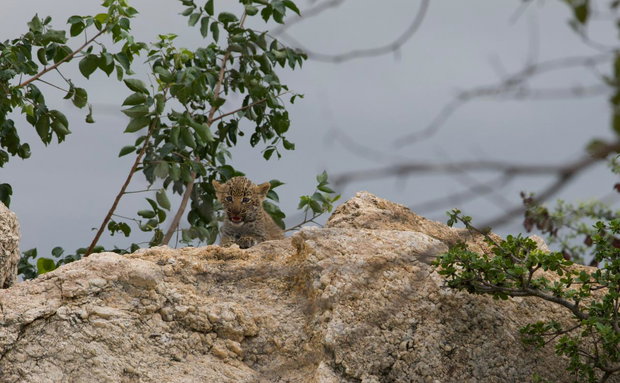
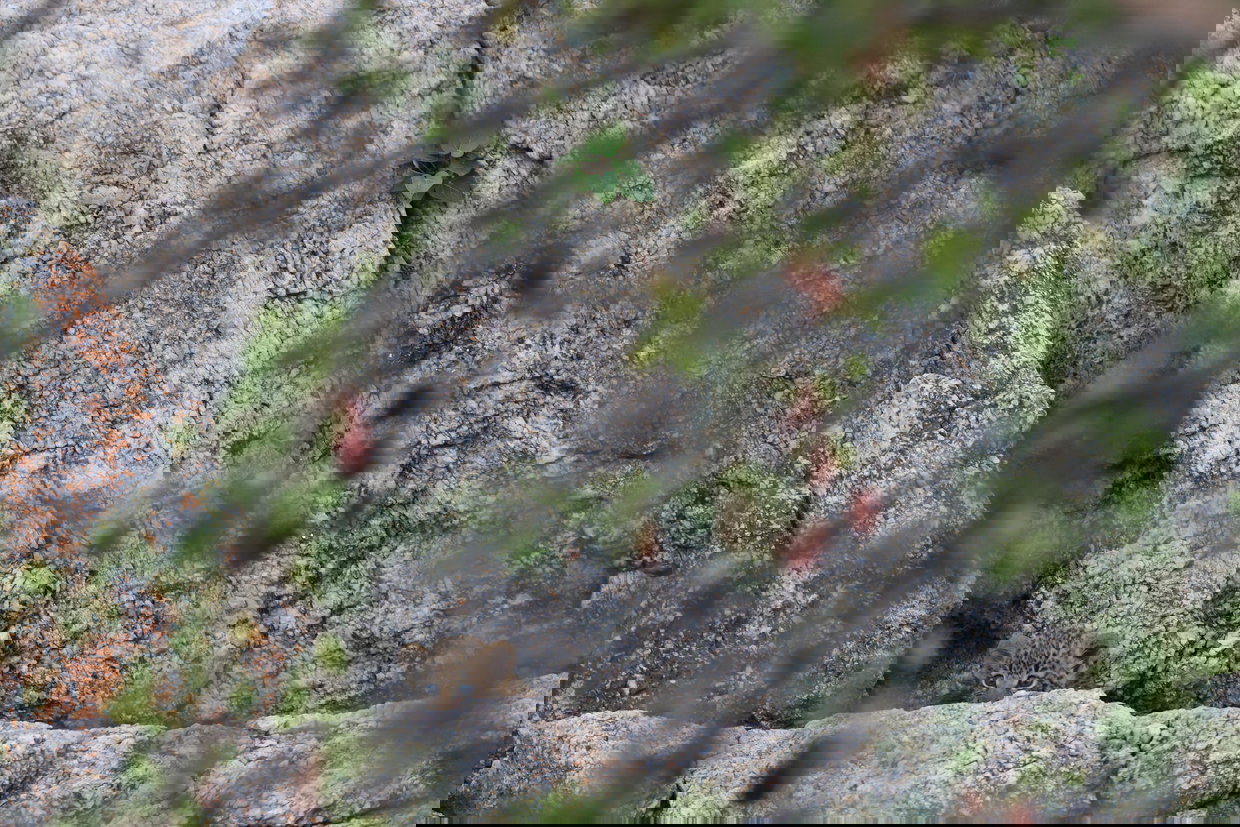
The other guide spotted the cubs first. As James pulled into position, he caught his first glimpse - one small figure slipping quickly back into the safety of the rocks, while the other hesitated. This one was different. Curious and confident, he stepped forward just enough, tilting his head slightly as he studied the vehicle, his blue eyes taking it all in.
Over the days that followed, James and our guests spent time quietly returning to the area, allowing the cubs to become accustomed to their presence.
“They were so small, like tiny little potatoes,” James recalls, smiling. “It was incredible to watch them playing in the rocks.”
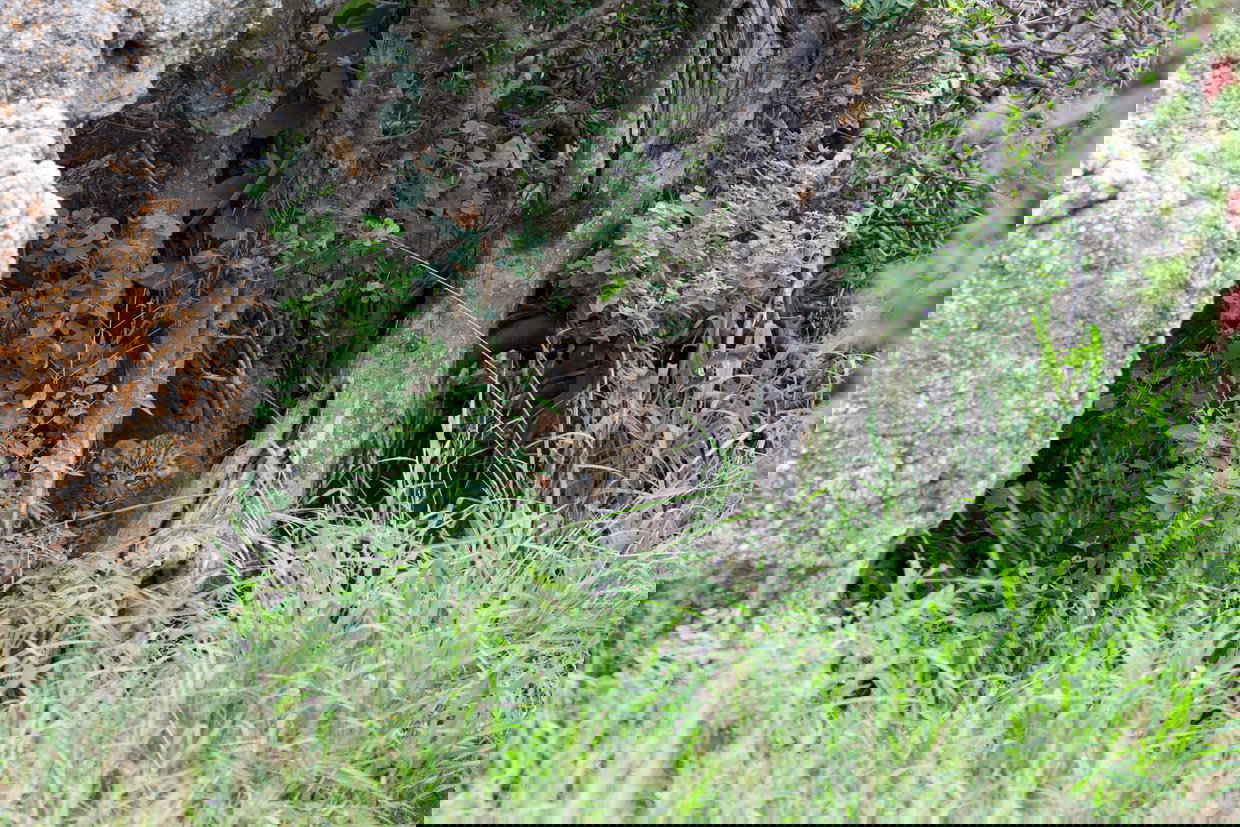
In the two weeks since their discovery, there have been several moments of pure, unfiltered joy. One morning, the cubs attempted to climb a milkberry tree beside their den. They hadn’t quite figured it out yet. Small claws gripped at bark, little bodies wriggled and stretched, and every so often one would lose its footing and tumble back down, only to try again moments later.
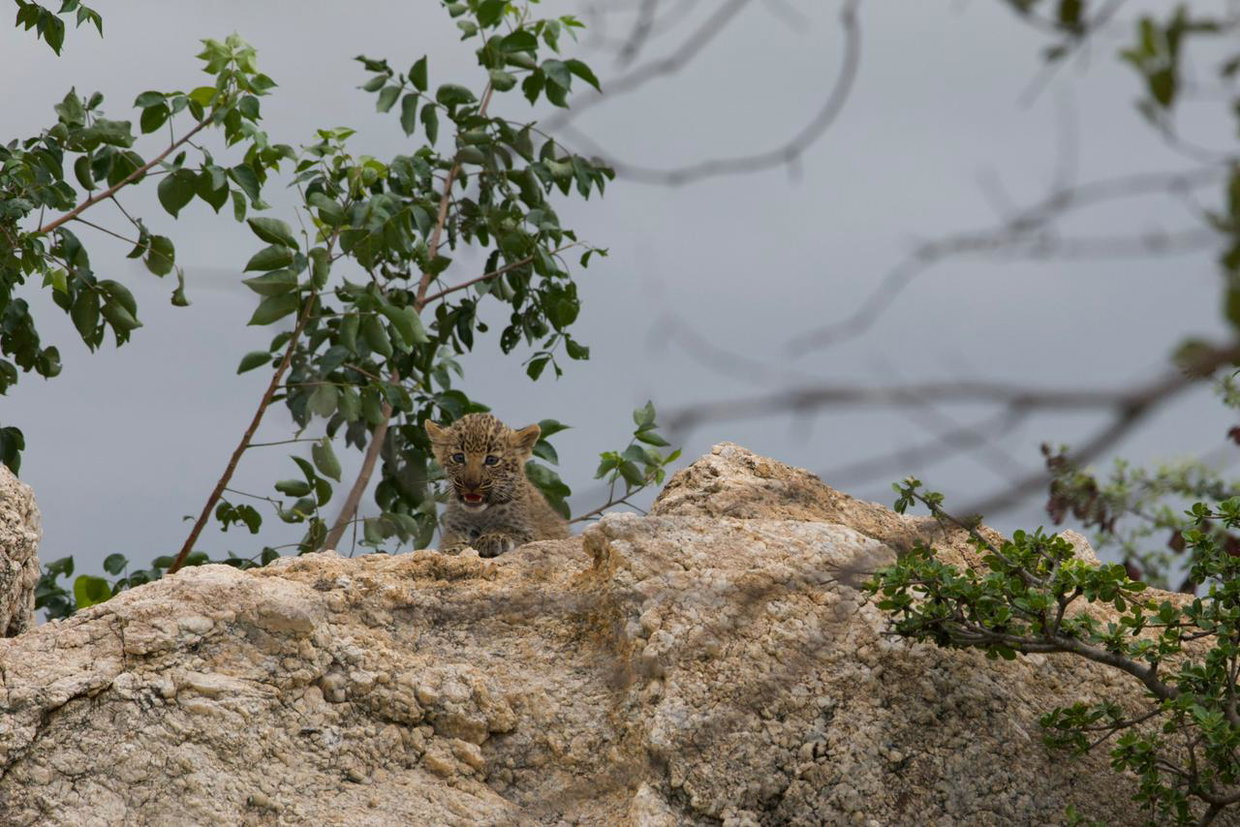
Eventually, their mother revealed herself. It was Maribye - the eldest daughter of the Island female. She moved with quiet caution, aware but untroubled, carrying the gentle vigilance of a first-time mother. She lacks the easy confidence of some of the more relaxed leopards in the area, and so it became important to give her space, watching from a respectful distance as she settled into this new role.
On another memorable occasion, James watched as she lay with her cubs, patiently allowing them to suckle, while one of them batted playfully at her tail - a small, fleeting moment of tenderness in an otherwise demanding life.
But life for a young leopard is never without risk.
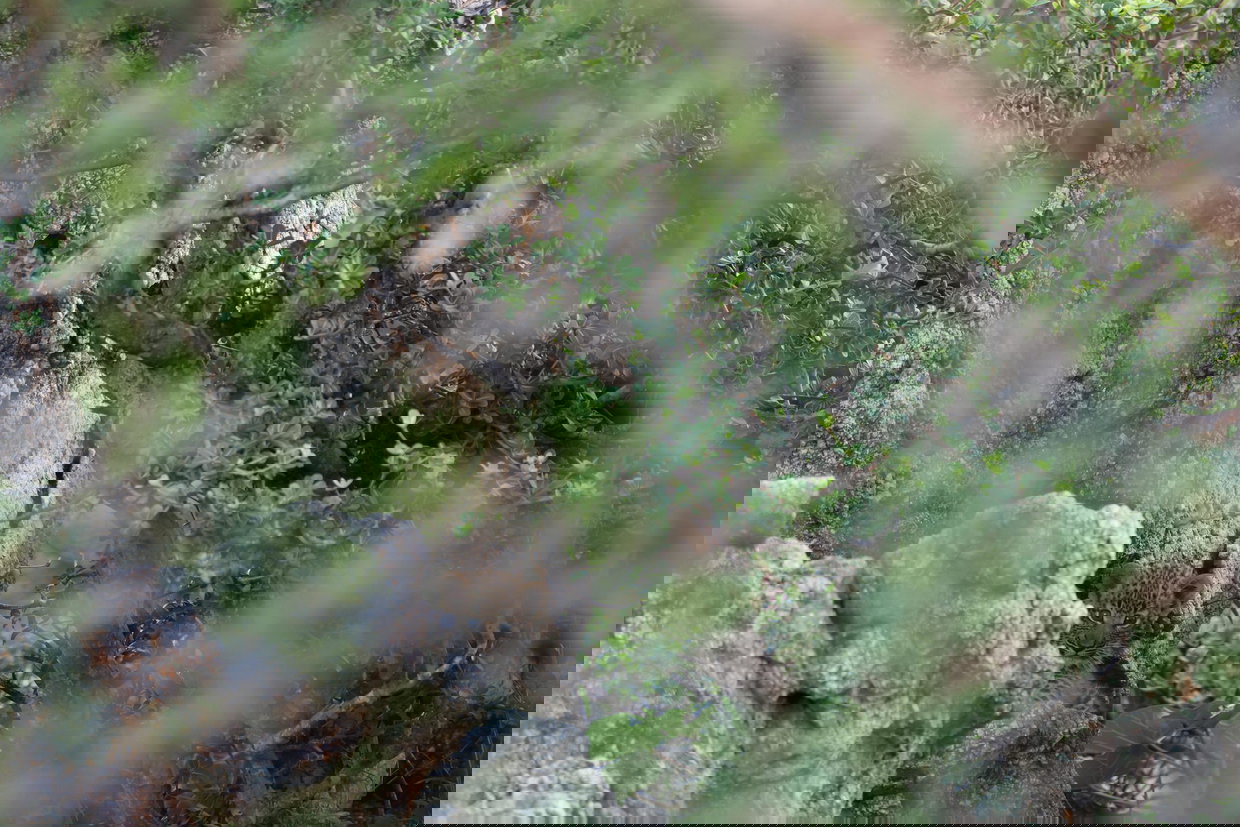
Sadly, it soon became clear that the quieter, more reserved cub was no longer there. We may never know what happened. With lions moving through the area, wild dogs passing close by, elephants frequenting the river, and even other leopards in the vicinity, the dangers are many. And beyond predators, there are other challenges - illness, malnutrition, exposure - all part of a fragile beginning.
For now, one little cub remains.
Despite everything, he continues to explore his small world with curiosity and courage, still climbing, still playing, still learning. There is something deeply hopeful in watching him - not because the outcome is certain, but because it isn’t. Only time will tell if Maribye can follow in her mother’s footsteps and raise this “tiny potato” into a strong, independent leopard. In the meantime, we simply watch - and take in each precious moment as it comes.
Words by Emily Whiting | Photos by James Raatgever
Further Reading
The Pale Male - A Legendary Leopard Lost
Sat November 29, 2025
Read This Article
Cub Cannibalism - A River Pride Tragedy
Wed November 23, 2022
Read This Article
Tragedy has struck the youngest members of the iconic Klaserie River pride leading to a rare case of cannibalism observed between the lion cubs. Keep reading for the full story...
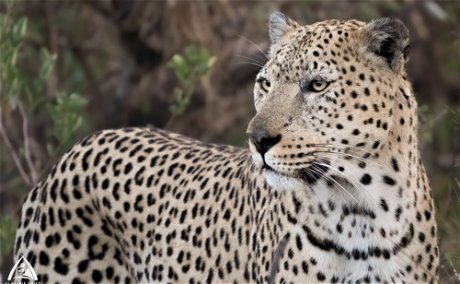
Leopards of Klaserie Drift
Tue August 9, 2022
Read This Article
Over the years, our guides have had the luxury of getting to know many of the different leopards that call our part of the Klaserie home. Whilst some grow and move on to pastures new, others stay and thrive along our stunning section of the Klaserie River, even raising the next generation of fabulous felines right on our doorstep. Following their stories and learning about each individual character is a fascinating aspect...

Share This Post